Overall lineup
Show the full assembly, section order, doors, labels, adjacent equipment, and accessible context.
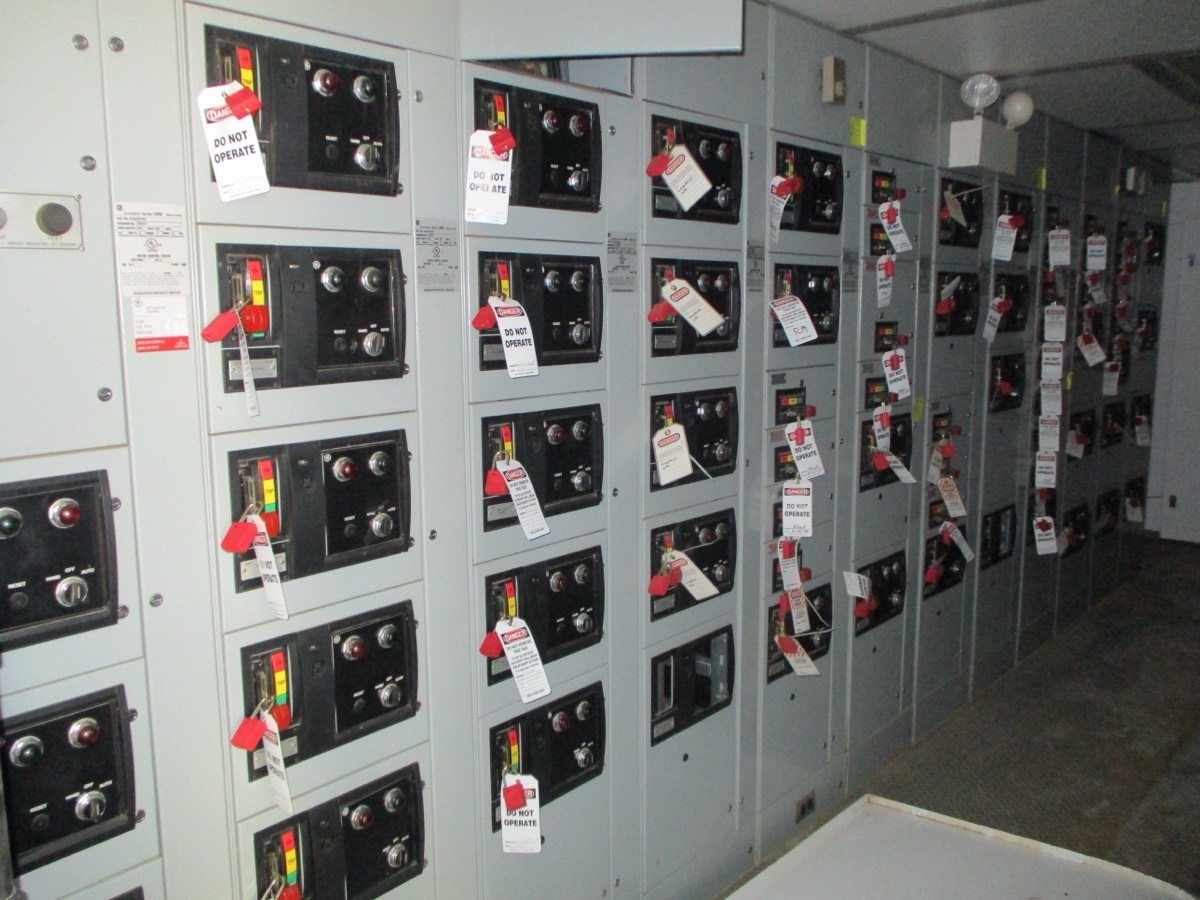



Exact identity helps prevent false crossovers and incomplete quotes. Capture the assembly, section, breaker or device, ratings, suffixes and revisions separately, and mark anything unreadable or unknown.
Show the full assembly, section order, doors, labels, adjacent equipment, and accessible context.
Capture manufacturer, family, serial, voltage, current, frequency, phase, duty and construction markings.
Show the specific cubicle, bucket, feeder, compartment, location and internal identifier.
Capture type, frame, ratings, trip/sensor, control voltage, mechanism, serial, suffix and revision.
Only if already safely visible: drawout/fixed arrangement, cradle, disconnects, secondary contacts, shutters and interlocks.
From a safe condition, show the failed or damaged area plus enough context to locate it in the assembly.
| Item | Examples of fields to preserve | Do not infer |
|---|---|---|
| Main assembly | Manufacturer, product family, catalog/model, serial, date code, nominal voltage, current, phase, frequency, short-circuit/withstand rating, BIL, enclosure/construction and standards markings | Voltage class, standard, listing or fault duty from appearance |
| Section/cell/bucket | Position, feeder/section number, label, unit size, device type, schematic reference and customer tag | That identical-looking compartments have identical equipment |
| Breaker | Type, frame, continuous rating, trip/sensor, interrupting rating, mechanism, control voltage, drawout/fixed, catalog, serial, suffix and revision | Compatibility from frame name or ampere rating alone |
| Relay/control device | Manufacturer, exact model, hardware/firmware/revision, power/control voltage, I/O or communications options and settings-file status | That a current model accepts an old configuration or wiring |
| Documents | Drawing number, revision, sheet, BOM item, instruction book, original submittal, test report and study date | That an undated drawing reflects the installed condition |
Take one context image and one square, readable close-up. Keep the camera parallel to the plate, use even light, avoid glare, preserve full edges, and do not crop off suffixes or revision lines. Retake blurry characters from a second angle.
A breaker review may require the assembly and cell identity, breaker type and frame, trip unit and sensor, interrupting rating, control voltage, charging/closing/trip mechanism, drawout or fixed construction, mounting, secondary disconnect, shutters, racking and interlock details, plus current protection settings and studies.
Use safe overall/context photos, neighboring device labels, drawings, BOMs, manuals, prior purchase records and test reports. Keep each source identified and dated.
Write “unknown,” “unreadable,” “not present,” or “cannot safely obtain.” Do not reconstruct a part number from resemblance or a partial character without labeling the uncertainty.
Submit non-sensitive facts through the existing-equipment path. If drawings or facility information are restricted, request a secure-transfer process before sending them.